What is Peyronie’s Disease?
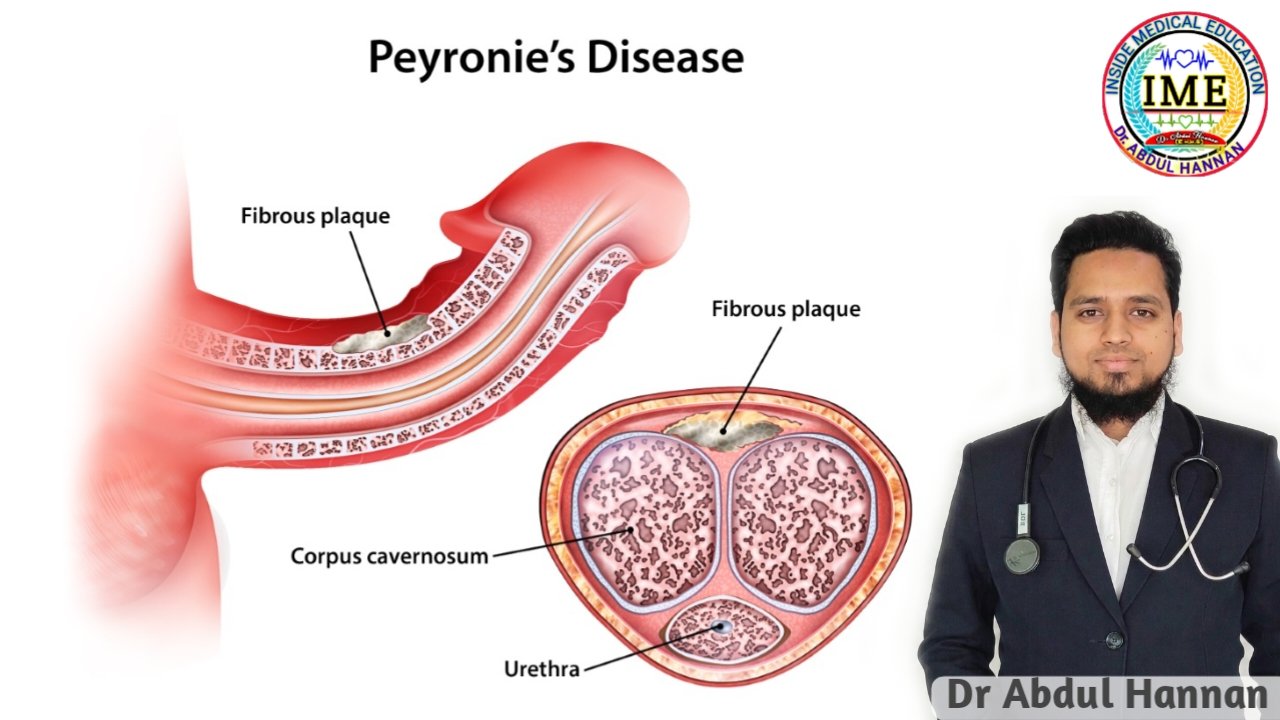
Peyronie’s Disease is a condition in which the penis develops an abnormal curvature, particularly during erection. The penis may bend towards the right or left side, or sometimes upward or downward.
A slight natural curvature of the penis is usually not a cause for concern. However, if the curvature becomes significant enough to interfere with sexual intercourse, causes pain to you or your partner, or makes penetration difficult, it may indicate Peyronie’s Disease.
In simple words: Peyronie’s Disease is a condition in which the penis develops a significant or abnormal curvature, usually associated with the formation of scar tissue inside the penis.
What Happens Inside the Penis?
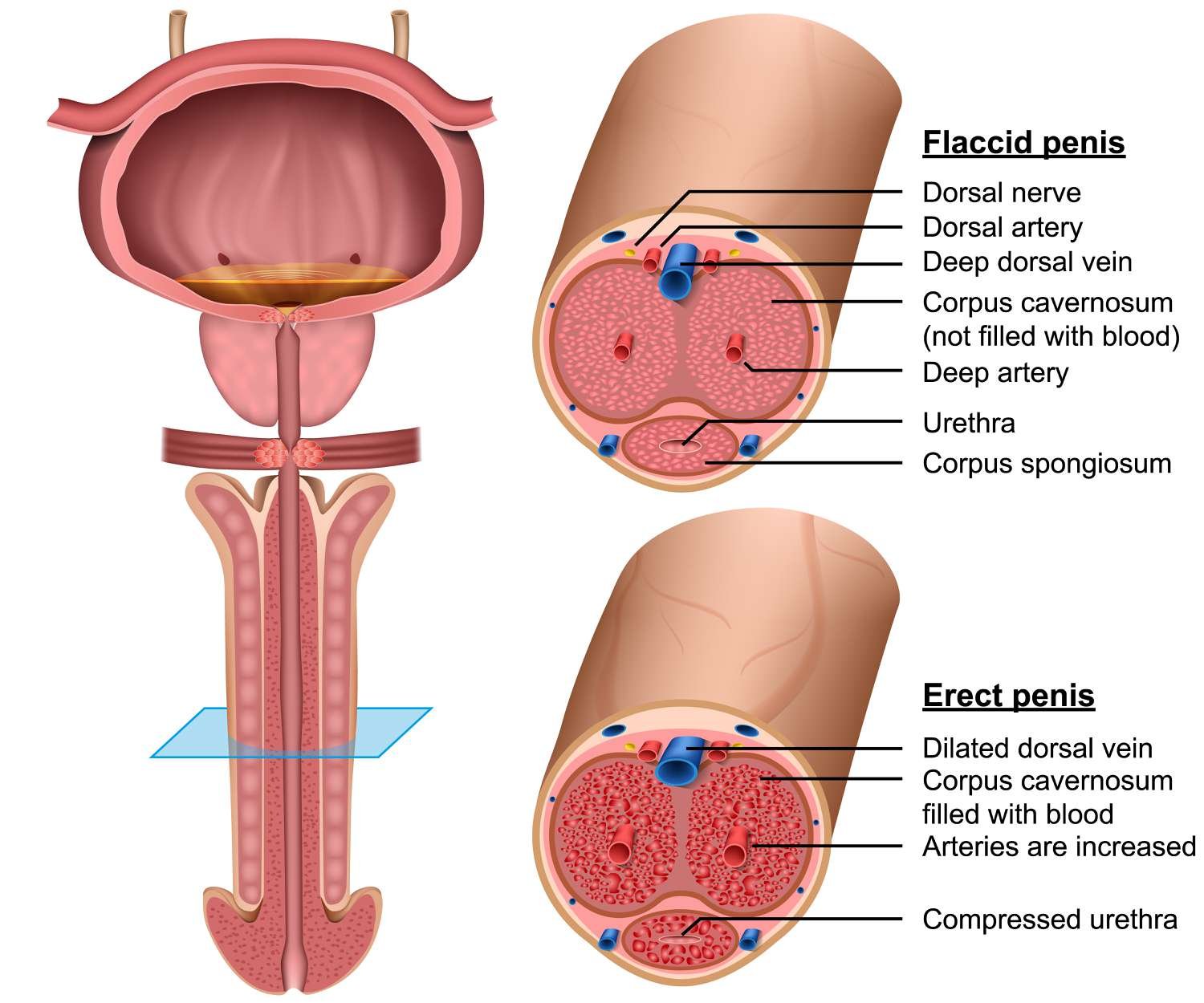
As you can see in the image, the internal structures of the penis are arranged in a specific way. The penis contains two main erectile chambers known as the corpora cavernosa, along with other surrounding tissues and structures.
In Peyronie’s Disease, injury or inflammation may lead to the formation of fibrous scar tissue or plaque within the tunica surrounding the erectile tissue. This scar tissue does not stretch normally during an erection and can therefore contribute to penile curvature.
Does Peyronie’s Disease Go Away on Its Own?
Peyronie’s Disease does not necessarily go away on its own in every person. In some individuals, the condition may stabilize over time, while in others, penile curvature, pain, or erection-related problems may persist.
Therefore, if you notice a new or progressively increasing curvature of the penis, it is important to undergo proper medical evaluation by a qualified Urologist.
This is especially important if you are experiencing pain, difficulty achieving or maintaining an erection, penile curvature that is getting worse, or difficulty during sexual intercourse.
Is Treatment for Peyronie’s Disease Possible?
There are several treatment approaches available for Peyronie’s Disease, and the appropriate option depends on factors such as the degree of curvature, pain, erectile function, duration of the condition, and its impact on sexual activity.
In our clinical experience, some patients have reported improvement in their symptoms and penile curvature during homeopathic treatment. We have also encountered cases in which patients reported significant improvement after treatment.
Important: Every patient is different, and treatment response can vary from person to person. Therefore, proper case-taking, diagnosis, and medical evaluation are important before starting any treatment.
Some patients with Peyronie’s Disease may only require observation and regular monitoring, particularly when the condition is stable and does not significantly affect sexual function.
Depending on the individual case, treatment options may include medical management, penile injections, penile traction therapy, vacuum devices, or other specialist treatments. In severe or long-standing cases with significant curvature or functional problems, surgery may also be considered.
When Should You Consult a Doctor?
If you notice a new curvature of the penis or if an existing curvature is becoming worse, do not ignore the problem. Early medical evaluation can help determine the underlying cause and the most appropriate management approach.
Clinical Tip: If you notice a new penile curvature, pain, a hard plaque or lump inside the penis, difficulty with erection, or difficulty during sexual intercourse, consult a qualified healthcare professional or Urologist for proper evaluation.
Do Not Panic About Peyronie’s Disease
A diagnosis of Peyronie’s Disease does not mean that you have to live with severe symptoms permanently. The condition varies from person to person, and the appropriate treatment approach depends on the severity of the curvature, pain, erectile function, and sexual difficulties.
After evaluating your individual condition, a qualified healthcare professional can guide you regarding the most appropriate treatment or management option.
Our Objective
Our objective is to provide reliable information about Peyronie’s Disease and help patients understand their condition. Every patient is different, so treatment and medical guidance should always be based on an individual assessment and proper clinical evaluation.